INTRODUCTION
What is on-page SEO?
On-page SEO is an important part of digital marketing. It is similar to using some strategies and tactics to make it look good not to just people but also to search engines like Google, yahoo etc.
It includes all the things that you can do to control your web page settings to help them show up higher in search engine results. It makes your website look easier to read, understand, and helps in building trust.
For example:
- Using the right Focus keyword in your content so that Google can know more about what possibly your page is about.
- Write short and eye catchy titles and descriptions
- Adding headings, images, and links in a chronological order to make your content look easy to understand and in a structrured manner.
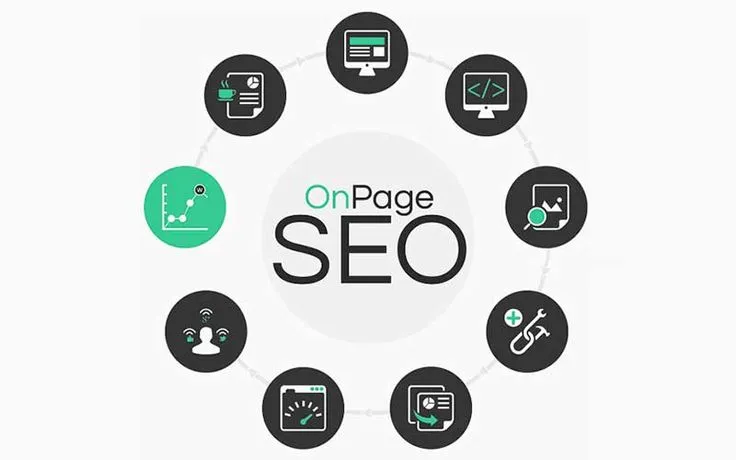
In short, on-page SEO is about creating web pages that are both helpful to people and friendly for search engines. If you focus on both of them then your website will have a better chance of ranking higher in search engines and generate traffic.
Why it matters for ranking higher?
For example- you own a small shop in a busy market, if your shop’s board is clear, the shelves are neat and clean, and everything is easy to find then more people will step in to buy something from your shop. There are high chances that they will also trust you and may even come back again.
That’s exactly is the role of on-page SEO does for your website. When your pages are clean, clear, and well-organized then Google understands them better. And when Google understands your content then it shows your website and content higher in search engine results so that more people can find you.
If you will ignore on-page SEO then it will be like having a shop with no signboard, dirty shelves, and poor lighting then even if you have great products (good content), people might ignore you.
So, on-page SEO matters because it helps Google to read your content easily and people (traffic) to enjoy your content.
And when both are happy, your website will naturally rank higher
Understanding the Basics of On-Page SEO
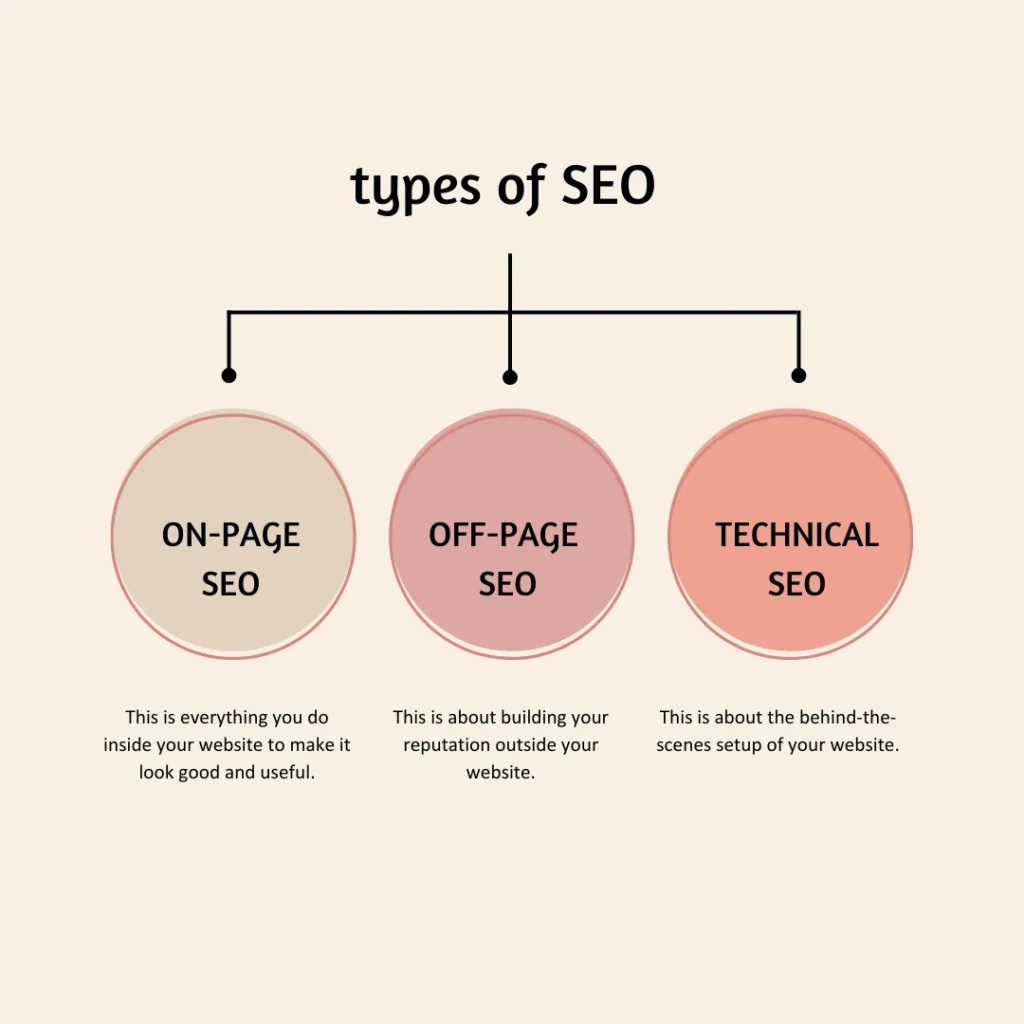
Difference between on-page, off-page, and technical SEO
Think of your website like a house you want people to visit.
- On-Page SEO is like decorating the interior of your house
- it includes everything that you do inside your website to make it look good.
- Example: Writing quality content, using the right keywords, adding headings, images, and meta descriptions.
- This make it easy for both people and Google to understand your content.
- Off-Page SEO → What others say about your house
- it includes building your reputation outside your website.
- Example: backlinks, people talking about you on social media, feedbacks and reviews.
- This is done to show Google that your site is trusted and popular.
- Technical SEO → to make sure your house is strong and safe
- it includes behind-the-scenes of your website.
- Example: Fast loading speed, mobile-friendliness, secure connection, and fixing broken links.
- it help search engines crawl and index your site easily.
How search engines read your page
The following steps will tell you how search engine reads your page-
- Crawling 🕷️
- Google usually sends some little “bots” that move accross the net.
- They visit your website, click on links, and explore your pages just like a person.
- Indexing 📖
- After that, they make notes about your page.
- google records your content, keywords, headings, images, and links and creates a catalog.
- Ranking 🏆
- When someone searches for something, Google look into its catalog and picks the most relevant, useful, and trustworthy pages.
- If your page is well-optimized (good on-page SEO), it has a higher chance of being recommended at the top.
Let’s keep all of this in mind while doing on-page SEO.
Top On-Page SEO Strategies for Higher Rankings
1. Optimize Title Tags
When naming your webpage, consider that it’s basically like giving a name to your brand or a catchy headline, and both search engines like Google and people will know exactly what it’s about if you use your main focus keyword in a natural way.
Coming in at under 60 characters, your title should be short, clean, and won’t get cut off in search results, and write it in such a way that piques people’s interest. You’re essentially writing the headline of a newspaper article, clear, relevant, and enticing. in on-page SEO, If you can achieve a title that is simple, yet meaningful, you’ll also be giving Google the best chance to figure out what your page is all about and you’ll see more people clicking through to your site.
2. Write Compiling meta discription
In on-page SEO, when crafting a meta description for your website you’re essentially giving your visitors a sneak peek into what your page is about and what they’ll learn if they click, and it’s got to be enticing enough to get them to do just that. Coming in at around 150-160 characters, so it shows up fully in search results and gives you a real SEO boost.
Keep it straightforward, clear and to the point, laying out what the reader will get from your page, and slipping in your main keyword naturally, which helps Google get what your page is about. Well-known as the face of your website in search results, your meta description should be warm, inviting, and speak to real people, it’s like a small promise you’re making to the reader. “Here’s exactly what you’ll find, and here’s why it’s worth your time.” If you nail the description, people will click on your link, and over time this will send your page up the rankings.
3. Use Keywords the Smart Way
In the case of SEO, using keywords in a page is not about shoving the same words into every corner, it’s about giving Google a clear understanding of what your page is about, one keyword at a time. Pick one main keyword that closely matches your topic, and sprinkle it naturally in your title, the first paragraph, headings, and meta description. For example- focus keyword “on-page SEO” shouldnot be stuffed in one part of your content.
After that, add related words and phrases throughout your content but in moderation. The goal is to add flavor to your content, not choke it. Remember to write for humans and if any sentence sounds weird or forced, take out the keyword and rephrase it. Your content should feel smooth, helpful and easy to read, as a well-seasoned dish, basically.
When keywords sit well and your content actually delivers what the reader is looking for, Google gets that signal and pushes your page up the ranks.
4. Structure Your Headings (H1, H2, H3, etc.)
You’re essentially creating a well-organised notebook, making it easy for readers to find and understand the information you’ve presented, when structuring your content.
In on-page SEO, the H1 is the main title of the page and should be used only once. It should clearly state what the page is about. You can use H2 headings to cover the main sections of your content, and breaking them down to H3 for the smaller subsections. This is analogous to chapters and sub-chapters in a book, and this clean and logical structure helps readers get to your content without getting disoriented and it makes Google see the way you’re presenting your information. If your headings are uncluttered, logical and contain keywords, but not to excess, then both your readers and search engines can navigate your page with no hassle and give you a boost in the rankings.
5. Improve Content Quality & Relevance
When discussing on-page SEO, boosting the quality and relevance of your content is all about writing something that people can’t live without, and answers exactly what they’re searching for.
You can figure out what your readers want, what problems they have, what they ask and what they’re trying to learn, then write to them in a clear, friendly and very simple manner, like you’re telling a story to a buddy. Your information should be accurate, bang up to date and dead easy to get through. Throw in examples, ideas, real life explanations to make it more useful, and don’t copy others, instead, add your own voice, flair, and inside knowledge.
Don’t go off the point either, stay on track and don’t waste words. When you write something that’s genuinely helpful, honest and written with the reader in mind, people will stick around, trust your page and Google will see it as a top priority, and before you know it, you’ll be at the top of the rankings.
6. Internal Linking Strategy
Using internal links is like gently guiding your visitors from one helpful room of your house to another. When you’re writing a page or blog, add links to other useful pages on your own website especially the ones that explain something in more detail or connect to the topic. This helps readers explore more of your content without getting lost, and it also helps Google understand how your pages are connected. Use clear, simple anchor text (the clickable words), so people know exactly what they’ll find when they click. Don’t add too many links just enough to make the journey smooth and meaningful. After completing your on-page SEO, when you link your pages thoughtfully, visitors stay longer, learn more, and Google sees your website as more organized and valuable, which can help improve your rankings.
Common On-Page SEO Mistakes to Avoid
As for search engine optimization, there are a few on-page errors that are fatal to your rankings. Repeating the same keyword over and over, known as keyword stuffing, is one of them. This makes your content sound completely artificial, and will more likely send your website plummeting down the rankings. Another error is duplicate content, and involves copying the same text across multiple pages.This will confuse Google and makes your website seem less trustworthy, with very few people clicking on it, or even finding it.
Yet another common mistake, and a lot of people make it, is to ignore the needs of mobile users. Since more than half of us now visit websites on our phones, a slow, awkward, or disorganised website will result in visitors quickly giving up and Google will take notice of it too. Well-known fixes for these mistakes are simple: naturally phrased writing, original content, and a website that works like a dream on all sorts of devices, especially mobile.
How to Track Your On-Page SEO Performance
Much like checking in on a project that you’ve put a lot of effort into, when monitoring the success of your on-page SEO you can check in on how well you’re doing. Google Analytics, Google Search Console and lightweight on-page SEO tools such as Yoast or Rank Math make this process seamless, providing you with real time data on how many people are visiting your website, which pages they’re reading, what keywords are sending them there and if Google can even crawl your site without any issues. Coming hand-in-hand with these tools, you should also monitor organic traffic, bounce rate, time spent on the page, click-through rate and keyword rankings. These will give you a good idea if people are enjoying your content, and if Google thinks it’s useful, and by regularly checking these results you’ll know what’s working, what’s not, and how to tweak your SEO strategy accordingly.
Conclusion
It’s often a collection of small details that add up to a huge impact on your website’s performance, when optimising your website on-page SEO. Crafting clear title tags, writing concise meta descriptions, sprinkling in keywords in a natural way, structuring your headings, lifting the quality of your content, adding internal links, and reducing the time it takes for images and pages to load, is basically a surefire way to give both search engines and your website visitors a smoother experience.
For long-term ranking success, focus on consistency. Keep your content updated, write for real people, and always aim to answer the reader’s questions better than anyone else. Remember, on-page SEO isn’t a one-time task it’s a habit. When you keep improving little by little, your website will continue to grow, attract more visitors, and rank higher over time.
Follow on instagram- @boosttberry